
Until 1982, the Lincoln Penny was made of bronze, which consisted of 95% copper, but later the composition was changed to zinc with a thin layer of copper — it contained 97.5% zinc.
This led to the emergence of eight main types of coins issued in 1982, the actual, for example, 1982 D penny value depends on three factors: the metal used, the size of the date stamp, and the overall condition of the coin.
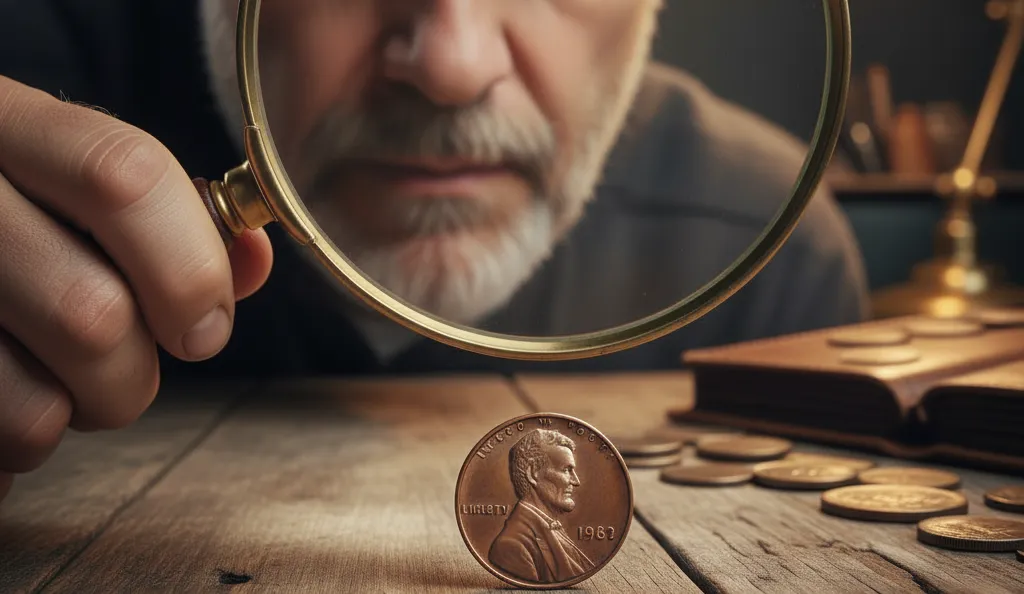
per vs Zinc
Copper coins weighing 3.11 grams and consisting of 95% copper and 5% zinc, their value often slightly exceeds their face value of 1 cent simply because of the current market price of copper.
Zinc cents, which weigh only 2.5 grams and consist of 97.5% zinc coated with a thin layer of 2.5% copper, were issued after the spring of 1982, when the mint began using this cheaper metal.
The only good and reliable way to determine the correct type is to weigh the coin on a scale that can measure with an accuracy of 0.01 grams: You should pay attention to 3.11 grams (±0.13 g) for copper or 2.5 grams (±0.10 g) for zinc.
The design of the numbers on the date also changed in 1982, resulting in two different styles: Large Date and Small Date, and when these date styles are combined with the two metals and the two major mints of Philadelphia and Denver, eight unique coin types are created.
Feature | Large Date | Small Date |
The 8 | The top part of the "8" and the "2" look like they are the same size | The top part of the "8" is clearly smaller than the bottom loop |
Space | The date numbers have more space between them and are spread further apart | The date numbers are placed closer together, looking more crowded |
Look | The overall date appears bigger and has a thicker, bolder look | The overall date appears thinner and looks much more neat |
1982-P Large Date, Copper
1982-P Small Date, Copper
1982-P Large Date, Zinc
1982-P Small Date, Zinc
1982-D Large Date, Copper
1982-D Small Date, Copper
1982-D Large Date, Zinc
1982-D Small Date, Zinc
Note: The San Francisco Mint, marked "S," only made special Proof coins in 1982, and it is always copper, meaning they are of high value only if they are in exceptionally good condition.
The Denver Mint was supposed to produce only zinc coins with a small date, and if a copper plate was mistakenly used in the Denver press, when the date stamped in small print would make the resulting coin unique and extremely valuable.
Since it has long been believed to be fake, if such a coin had actually been found and officially verified by a leading valuation company such as PCGS or NGC, its price would easily have exceeded $50,000 or possibly much more, although it should be noted that as of 2024, no coins of this specific type was widely known and was not publicly sold.
Because the Philadelphia Mint only produced this special type, a small copper date, for a very limited and short period of time. A perfect red token (MS-67 Red or RD) can be successfully sold for $1000-5000.
This error is noticeable on some of the 1982 cents, because the letters "LIBERTY" and "IN GOD WE TRUST", as well as the numbers in the date, appear to be double or divided into two parts, which can cost 2-5 times more than a regular coin of the same quality.
If you want to accurately determine the true value of any coin issued in 1982, it is absolutely necessary to check three main characteristics: its type, condition and specific color.
About Uncirculated: it has only small signs of wear, yet it still keeps a noticeable shine
Mint State: it is one that was never used in circulation
MS-60 – MS-64: can have small surface marks
MS-65: only a few small flaws that are hard to see
MS-68: represents a near-perfect coin
Brown: The coin has a brown color because the copper is completely oxidized, making it the lowest value category.
Red-Brown: The coin has a reddish-brown appearance, having kept 50% or more of its original red color, medium value category.
Red: This means the coin is predominantly red, having kept 95% or more of its original red color, the highest value category.
Example: A 1982-P Large Date Copper coin that is graded MS-65 BN might only cost around $10, but the exact same type of cent that achieves the MS-65 RD grade can surprisingly cost up to $200.
Type | Approx. Price (USD) |
1982-P/D Zinc (Any Date) | $0.01 – $0.10 |
1982-P/D Copper (Any Date) | $0.03 – $0.05 |
Values change based on market demand, condition, grading, and the specific characteristics of individual coins.
Type | Condition | Approx. Price (USD) |
1982-P Large Date Copper | MS-66 RD | $100 – $250 |
1982-P Small Date Zinc | MS-67 RD | $150 – $300 |
1982-P Small Date Copper | MS-66 RD | $300 – $700 |
1982-D Large Date Copper | MS-66 RD | $150 – $400 |
Values change based on market demand, condition, grading, and the specific characteristics of individual coins.
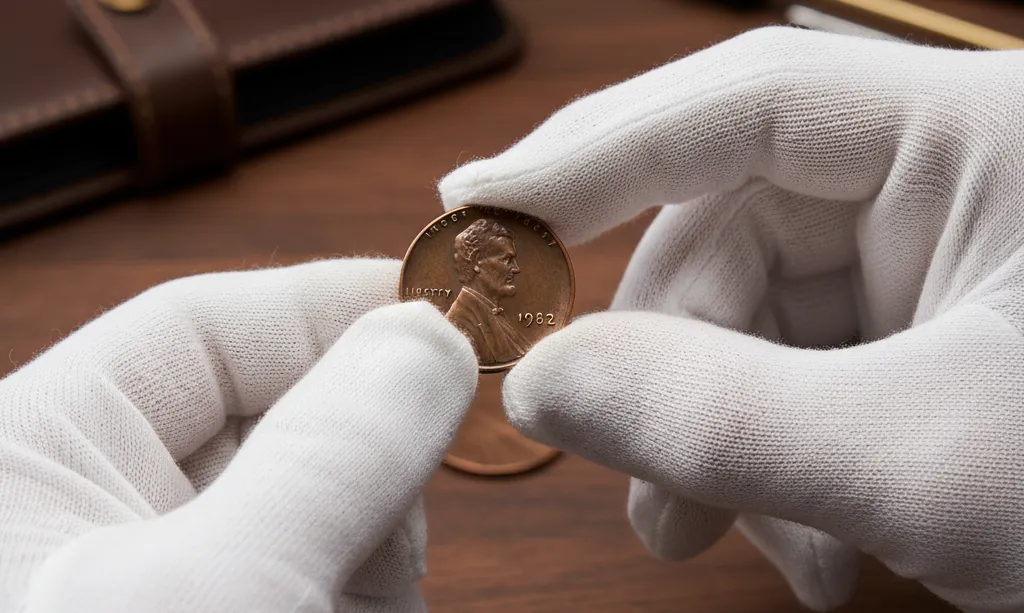
1982-D Small Date Zinc (MS-68 RD): the rarest type made from zinc, with only a few examples known to exist, its price easily going over $4,000 – $5,000.
1982-P Small Date Copper (MS-68 RD): it was produced for such a very short time and is found in a perfect, high condition, its price can reach $7,000 – $10,000+.
1982-D Small Date Copper: NOT FOUND YET — If this coin were ever found and then officially checked by experts, its price would immediately be over $50,000.
First, you must visually inspect all the 1982 coins you find, sorting them based on the mint mark (P, D, or none) and the date style (Large or Small), making sure to keep the ones that appear the cleanest.
After you have completed the visual inspection and sorting, you should begin the weighing, where all 1982 coins that weigh 3.11 grams are immediately worth more than 1 cent:
All Denver coins with a Small Date that weigh 2.5 grams (Zinc)
All Philadelphia coins with a Small Date that weigh 3.11 grams (Copper), as these can potentially be worth $300–$1,000 if they are graded MS-65 RD.
Finally, you must check all Denver coins with a Small Date that weigh 3.11 grams as "The Holy Grail" token of 1982.
Why you should not clean coins:
Destroying Patina: The value comes from its original surface and the patina, the natural old layer that forms over many years, and cleaning, especially with chemicals or hard rubbing, permanently removes patina and leaves small scratches
Lowering the Grade: If a coin was perfect graded MS before it was cleaned, any action taken to clean it will immediately lower its grade which can cut its financial value by 50% or even more
Danger to Zinc: The 1982 cents that contain a zinc core weighing 2.5 g are sensitive to chemicals, acids or strong cleaning liquids can quickly break the thin copper layer, causing the core to become damaged very fast.
If you have a coin that is covered in loose dirt or dust that prevents you from checking it properly, you are allowed to perform a task called conservation, but you must never do a full cleaning, and this task involves only gently washing the coin in distilled water.
You must never use brushes, toothpaste, vinegar, or any strong, industrial cleaners, because the entire purpose of conservation is to keep the coin safe and stable, not to make it look brand new.
You should never clean valuable coins, and if you find a potentially valuable 1982 cent in a high grade ( RD or MS-67), you must leave it exactly as you found it and immediately speak to a professional coin grader.
When buying and selling coins, keep in mind that this series has 8 variations, do not forget about the composition, so as not to accidentally buy doubles. First, study the entire local auction market, and later focus on rarer examples.
Coins that are in perfect condition (MS-67 and better) and display a clear red color
Coins that were made with the copper metal but were incorrectly stamped with the small date or the Denver mint mark, clearly shows a major mistake in the production process.

Learn how to create a mood board for interior design! This step-by-step guide covers concept development, gathering inspiration, and finalizing your board to help you visualize and bring your design v...
Read more

Learn how to create stunning, art-inspired fashion pieces at home! From finding inspiration and gathering materials to designing, personalizing, and showcasing your work, this guide covers everything ...
Read more

Discover 6 beautiful, fragrant flowers that bloom after sunset. From Moonflower to Four O’Clocks, learn how to grow a garden that glows, smells amazing, and comes alive at night. Tips for care, frag...
Read more

Comprehensive technical analysis of the 1970 10-cent coin. Detailed study of Philadelphia, Denver, and San Francisco mintages, metallurgical properties, and investment-grade market trends....
Read more